 Leer en Español
Recovery is one of the most important stages after rhinoplasty. Even when the surgery itself is successful, correctly following medical guidance during the postoperative period directly affects swelling, healing, and the final result. Among all the recommendations patients receive, one of the most important has to do with how they sleep during the first few weeks.
It's natural to wonder what the best position for resting is, how long you should keep your head elevated, or what might happen if you accidentally roll onto your side. These are very common concerns, and addressing them helps avoid unnecessary worry during recovery.
If you're considering rhinoplasty or have just undergone the procedure, this guide will explain how to sleep correctly after surgery, why it matters, and what care supports a more comfortable and safer recovery.
Why does sleeping position matter after rhinoplasty?
During the first few days after surgery, the nose and surrounding tissue go through a completely normal inflammatory process. How a patient sleeps can influence that swelling and their overall comfort during recovery.
Sleeping in the right position helps reduce fluid buildup, supports circulation, lowers pressure on the nose, and reduces the risk of involuntary movements that could affect the treated area.
A good posture also helps protect the nasal splint and prevents accidental bumps while the patient sleeps.
The best position for sleeping
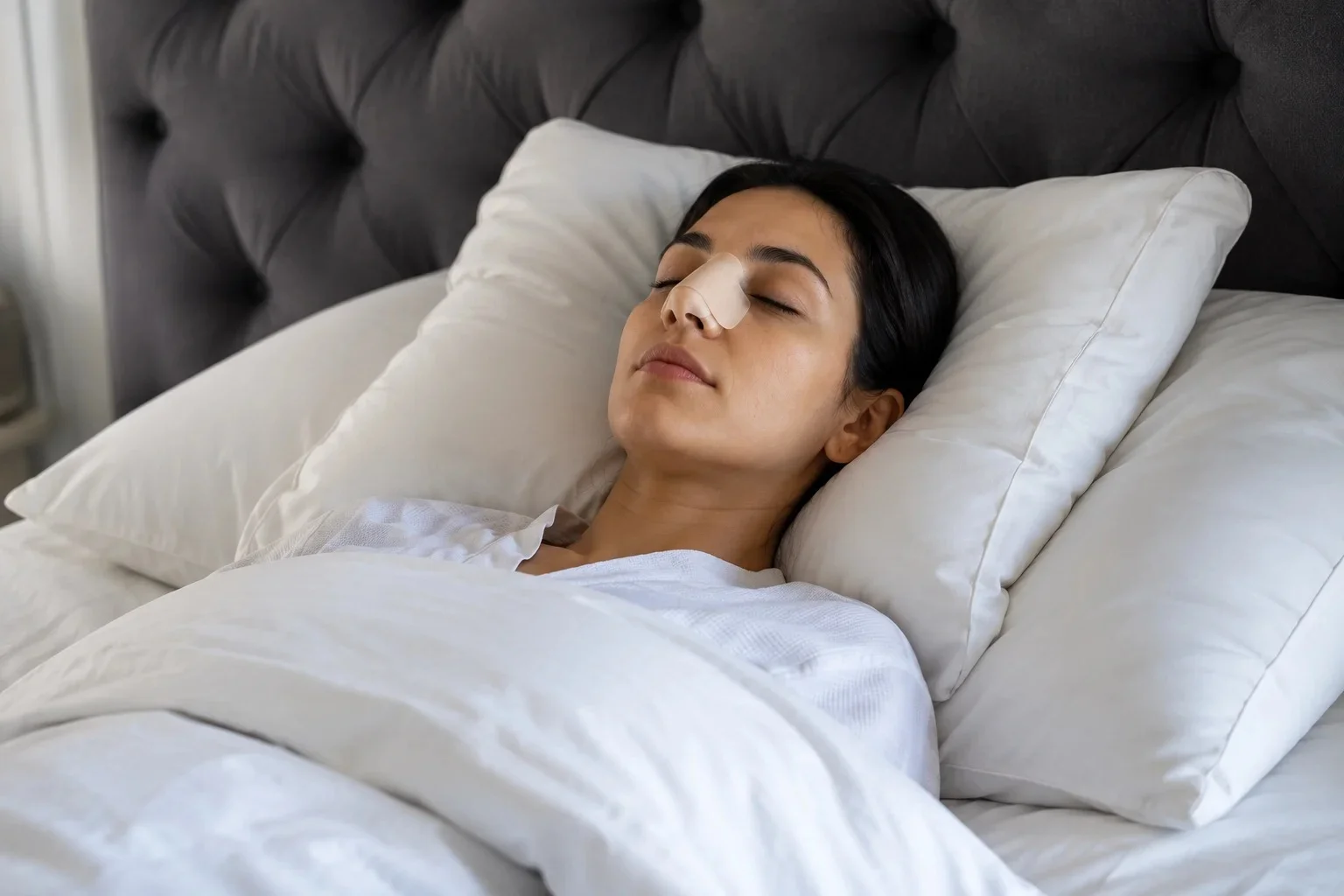
After rhinoplasty, the most recommended position is sleeping on your back with your head slightly elevated.
Keeping the head above heart level promotes drainage of accumulated fluids and helps reduce swelling during the first few days.
Many specialists recommend using two or three pillows or a wedge-shaped cushion to maintain a comfortable incline throughout the night.
This position also reduces pressure on the nose and protects the recently treated structures.
How long should I sleep with my head elevated?
Most patients are advised to maintain this position for at least one to two weeks after surgery.
However, the timeframe can vary depending on the type of rhinoplasty performed, the patient's progress, and the specific instructions of the facial plastic surgeon.
Even as swelling gradually decreases, continuing to sleep with your head slightly elevated for a few additional days can make recovery more comfortable.
Can I sleep on my side?
Sleeping on your side is not recommended during the first few weeks.
Resting your face against the pillow can put pressure on the nose, which increases swelling and causes unnecessary discomfort.
In addition, involuntary movements during sleep could shift the protective splint or place excessive pressure on tissue that is still healing.
Once your specialist confirms that recovery is progressing well, they can let you know the right time to go back to sleeping on your side.
Is it dangerous to sleep on your stomach?
Sleeping on your stomach is one of the positions that should be completely avoided during the initial recovery period.
This posture places direct pressure on the nose and significantly increases the risk of accidental bumps or displacement.
Even with the splint still in place, sleeping face-down can increase swelling and cause additional discomfort.
For this reason, it's important to try to maintain a stable position throughout the night.
What happens if I accidentally change position while sleeping?
This is a common concern among patients.
Although many people move while they sleep, that doesn't mean an occasional small movement will compromise the results of the surgery.
What matters is trying to start the night in the correct position and taking steps that help you stay on your back. Some patients place pillows on either side of their body to limit movement during sleep and feel more secure.
If a position change happens occasionally, it generally isn't a problem, although it's always a good idea to let your surgeon know if you experience intense pain or a significant bump to the nose.
Does sleeping well help recovery?
Absolutely.
Sleep plays a fundamental role in the healing process. While the body rests, numerous mechanisms activate to repair tissue, reduce inflammation, and strengthen the immune system.
Getting enough sleep also helps reduce the physical and emotional stress associated with the postoperative process.
That's why, in addition to caring for your sleeping position, it's important to create a calm, comfortable environment with a pleasant temperature to support restorative sleep.
How can I sleep better after rhinoplasty?
The first few days can be uncomfortable due to swelling and a feeling of nasal congestion.
Keeping the room slightly cool, using firm pillows to support the head, and correctly following the treatment prescribed by the specialist can significantly improve sleep quality.
It's also a good idea to avoid stimulating drinks at night and to keep a consistent sleep schedule to support recovery. As swelling decreases, sleep becomes increasingly comfortable.
When can I go back to sleeping normally?
Every patient recovers differently.
In general, many people can start sleeping in more familiar positions after two to three weeks, as long as the surgeon confirms recovery is progressing well.
However, those who are used to sleeping on their stomach usually need to wait a little longer to avoid placing direct pressure on the nose.
The final recommendation will always depend on the medical evaluation during follow-up visits.
Other important care during recovery
Sleeping correctly is only one part of the recovery process. It's also important to avoid intense physical exertion, protect the nose from accidental bumps, attend all follow-up appointments, and carefully follow instructions related to medication, hygiene, and diet.
Each of these measures helps reduce swelling and contributes to a more satisfactory final result.
What if I have trouble sleeping?
Some patients have difficulty falling asleep during the first few days due to nasal congestion or the need to sleep in a position different from their usual one.
In these cases, it's important not to self-medicate. If insomnia or discomfort persists, the best course of action is to consult your surgeon, who can recommend the most appropriate measures for your situation.
As recovery progresses, most patients quickly return to their normal sleep habits.
The importance of medical follow-up
Every rhinoplasty is different, and every patient heals at their own pace. For this reason, all recommendations related to rest, physical activity, and returning to daily activities should be tailored to each case.
Follow-up appointments allow the specialist to evaluate the progress of swelling, monitor healing, and address any questions that arise during recovery.
Have questions about your recovery?
Dr. Hernández Pizzoglio will guide you through the entire postoperative process and provide recommendations specific to your case.
BOOK A CONSULTATION